Historic Santa Clarita Valley Community
An unincorporated Santa Clarita Valley community with a proud history as the 'Black Palm Springs' of the 1920s.
Val Verde is an unincorporated community in northwestern Los Angeles County, California, set in the foothills of the southeastern Topatopa Mountains at the western edge of the Santa Clarita Valley. The name is Spanish for "green valley," a reference to the community's lush pocket of hills and canyons. Val Verde sits near the city of Santa Clarita and the unincorporated community of Castaic, placing it within one of northern Los Angeles County's fastest-developing regions while retaining a distinctly rural, hillside character of its own. The community's defining story is its history as a resort town. Val Verde was founded in 1924 as a retreat for African Americans during a period when discrimination excluded Black residents from many of Southern California's beaches, pools, and hotels. It became widely known as the "Black Palm Springs," a place where families could swim, socialize, and gather on weekends away from the segregation of the era. The area had earlier origins as a mining settlement, and over time it evolved from a seasonal resort into a year-round residential community. That heritage remains a central part of Val Verde's identity and is documented in local and regional histories. Today Val Verde is a quiet, low-density community where most residents own their homes and the prevailing feel is rural rather than suburban. Its hillside setting offers canyon views, open space, and a degree of separation from the sprawl of the Santa Clarita Valley, even as shopping, services, and employment in Santa Clarita remain close at hand. The community's small scale and unincorporated status mean it relies on Los Angeles County for services and on the surrounding school districts for education. For residents, Val Verde combines a culturally significant past with a practical present: a foothill community that is removed from urban congestion but connected to the broader Santa Clarita and Los Angeles region by major highways.
Val Verde is an unincorporated community in northwestern Los Angeles County, California. It sits in the foothills of the Topatopa Mountains at the western edge of the Santa Clarita Valley, near the city of Santa Clarita and the community of Castaic.
Val Verde was founded in 1924 as a resort community for African Americans during a period when segregation barred Black residents from many Southern California beaches, pools, and hotels. It became known as the 'Black Palm Springs,' a place where families could gather and recreate freely, and that history remains central to the community's identity.
Students in Val Verde attend the Castaic Union School District for elementary and middle school and Castaic High School for grades nine through twelve. Castaic High School is part of the William S. Hart Union High School District, which serves Val Verde, Castaic, and Hasley Canyon.
No, Val Verde is an unincorporated community. It does not have its own municipal government and instead receives services from Los Angeles County. The area has a rural, low-density character with most homes owner-occupied.
Val Verde is located just west of the city of Santa Clarita, in the Santa Clarita Valley. It sits within reach of Interstate 5 and State Route 126, providing convenient highway access to Santa Clarita, the San Fernando Valley, and the wider Los Angeles region.
City Guide
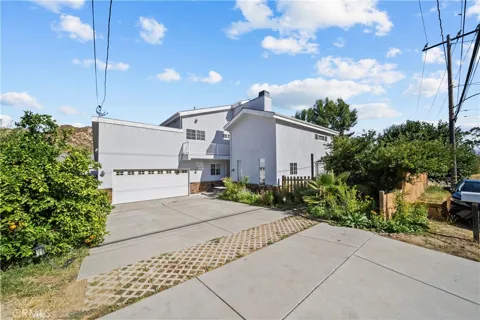
Housing in Val Verde reflects its origins as a foothill resort community that gradually became residential. The stock consists largely of single-family, owner-occupied homes set into the community's hilly, canyon terrain, many with views of the surrounding mountains. Lots are often larger and less uniform than in the tract developments that define nearby Santa Clarita and Valencia. Because Val Verde is unincorporated and geographically constrained by its foothill setting, it has retained a rural, low-density feel rather than absorbing the large-scale subdivisions found elsewhere in the valley. The result is a housing character that emphasizes space, privacy, and a more individual, non-conforming streetscape.
Val Verde operates as a single, close-knit community rather than a collection of separately named neighborhoods. Its geography follows the contours of the foothills, with roads climbing through canyons and homes scattered across the slopes. The community's historic core traces back to its founding as a resort in 1924, and that history gives the area a strong shared identity. Nearby Castaic and the city of Santa Clarita form the larger urban context, but within Val Verde the feel remains that of a distinct, self-contained foothill settlement with its own cultural memory and a clear sense of place.
Life in Val Verde is quiet and community-oriented, shaped by both its rural setting and its distinctive history. Residents live amid hills and canyons with open space nearby, giving the community a pace and atmosphere closer to a mountain town than a Los Angeles suburb. The community's legacy as the "Black Palm Springs" remains a source of local pride and cultural identity. Daily needs, shopping, and entertainment are found a short drive away in Santa Clarita and Valencia, allowing Val Verde to offer the unusual combination of a secluded, rural home setting with convenient access to a full-service suburban region.
Students in Val Verde are served by the Castaic Union School District for elementary and middle school, and by Castaic High School for grades nine through twelve. Castaic High School is part of the William S. Hart Union High School District, whose boundaries are coterminous with those of the elementary district and include the communities of Castaic, Hasley Canyon, and Val Verde. This arrangement connects Val Verde to a set of Santa Clarita Valley schools that serve the surrounding foothill communities, giving local students access to district facilities and programs located nearby rather than a long commute out of the area.
Val Verde sits at the western edge of the Santa Clarita Valley, within reach of Interstate 5, the principal north-south route through the region, and State Route 126, which links the valley toward the coast and Ventura County. The community's location gives residents relatively direct highway access to Santa Clarita, the San Fernando Valley, and the broader Los Angeles area, while its foothill setting keeps local streets quiet and lightly traveled. Commuting patterns in this part of northern Los Angeles County are heavily car-based, and Val Verde's highway connections are a key part of its appeal for those who want a rural home base with metropolitan reach.
Val Verde's foothill location places outdoor recreation close at hand. The community is surrounded by the open space of the Topatopa Mountains foothills and sits within the Santa Clarita Valley, which offers a network of trails, parks, and open-space preserves. Nearby attractions include the recreation and entertainment options of Santa Clarita and Valencia, as well as access to the larger Angeles National Forest for hiking and outdoor activities. The community's own hillside setting provides everyday opportunities for walking and enjoying canyon views, reinforcing the rural, outdoors-oriented character that has defined Val Verde since its resort-era beginnings.
MARKET SNAPSHOT
How homes have been selling here over the last 90 days.
Market data reflects closed sales over the last 90 days and is provided for informational purposes.
BROWSE BY ZIP
Browse listings by postal code in this area.